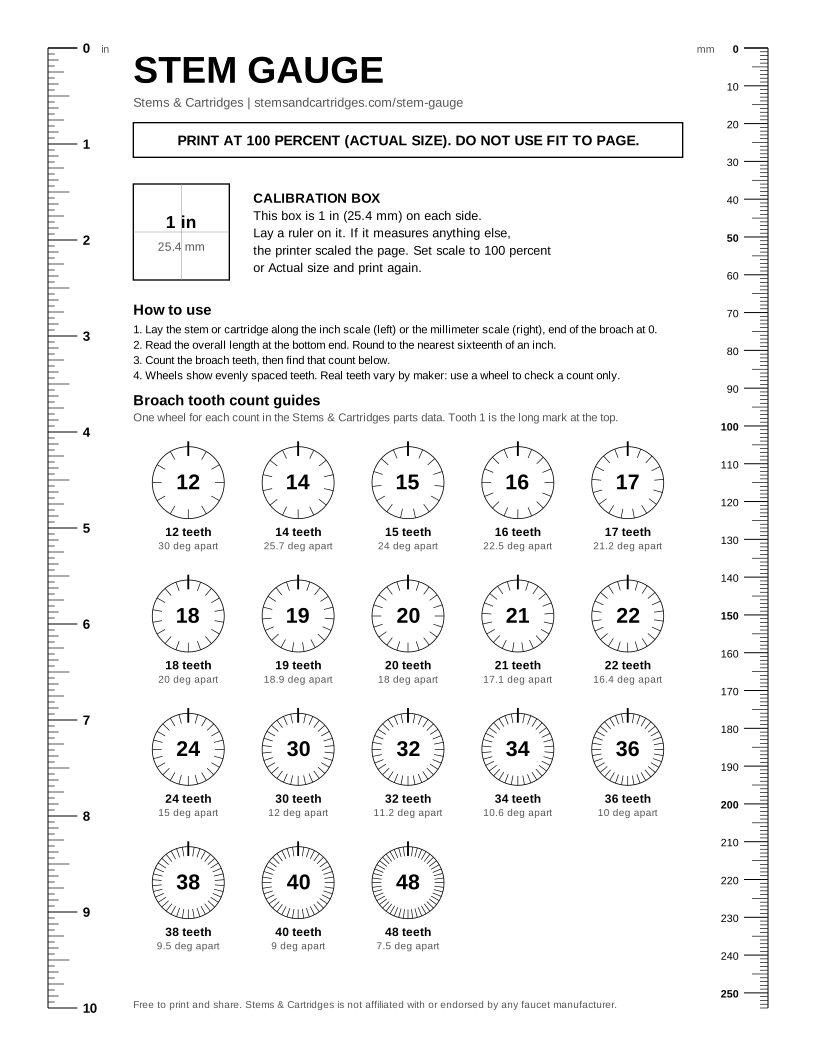
1. Print it at 100 percent
Open the PDF and choose Actual size or 100 percent in the print dialog. Do not choose Fit, Fit to page or Shrink to fit. Any of those scales the sheet, and a scaled ruler is worse than none. The file asks for Actual size by default, but some viewers ignore the request. Use US Letter paper, 8.5 x 11 in.
2. Check the calibration box
Lay a ruler or tape measure across the box marked 1 in. It should read 1 in, or 25.4 mm, edge to edge. Then look at the long scales: the 10 in mark on the left and the 254 mm mark on the right sit level with each other. If the box is off, the printer scaled the page. Turn the scaling off and print again.
3. Measure the length
Lay the part along the inch scale on the left or the millimeter scale on the right, with the tip of the broach (the splined end the handle fits on) at 0. Read to the very bottom end and round to the nearest sixteenth of an inch. The inch scale runs to 10 in, longer than any part listed here (the longest is 8.38 in.). If the stem has a rubber washer and screw on the bottom, note whether you measured with it in place. The how to measure guide covers pulling the part and the other measurements.
4. Count the broach teeth
Put a dot of marker on one tooth, or wrap the broach in masking tape and press it with a fingernail so every tooth shows. Peel the tape off and count the marks flat on the counter. Then find that count on the sheet. Each wheel shows evenly spaced teeth with tooth 1 at the top. A real broach is a different size and its teeth differ by maker, so use the wheel to check a count, not a diameter. A square, D-shaped or other broach with no teeth has no count; note the shape instead.
5. When the count falls between two counts
Recount before you decide anything. Start at the marked tooth, go around once, and do it twice. In our data file, 841 of 897 toothed parts list an even count, and odd counts (15, 17, 19, 21) are the exception. If two recounts disagree, the number that repeats is yours. If you still land between two counts, say 18 and 20, run the identify tool once for each, with the same length, and compare the shape of your part against each listing. If neither matches, send us the measurements and a photo.
Counts on the sheet
One wheel for every broach count in our parts data: 18 counts, from 12 to 48. The last column is the number of parts listed on this site. Counts marked none yet (14, 17, 21, 22, 34 and 48) are in the parts data but have no row in the public index.
| Teeth | Degrees between teeth | Parts listed here |
|---|---|---|
| 12 | 30 | 83 |
| 14 | 25.7 | none yet |
| 15 | 24 | 3 |
| 16 | 22.5 | 130 |
| 17 | 21.2 | none yet |
| 18 | 20 | 31 |
| 19 | 18.9 | 23 |
| 20 | 18 | 100 |
| 21 | 17.1 | none yet |
| 22 | 16.4 | none yet |
| 24 | 15 | 6 |
| 30 | 12 | 1 |
| 32 | 11.2 | 1 |
| 34 | 10.6 | none yet |
| 36 | 10 | 3 |
| 38 | 9.5 | 10 |
| 40 | 9 | 1 |
| 48 | 7.5 | none yet |
Sharing it
Print it, copy it, hand it out at the counter. If you link to it, link to this page so people get the current sheet.